
Protect your smile on and off the field. Learn why custom sports mouthguards provide better protection, fit and comfort for kids and adults, and when to replace yours. Advice from Oracle Dental Broadbeach on choosing the right mouthguard for sport.
Custom Sports Mouthguards Gold Coast
Protect Your Teeth While You Play
Whether you play rugby on the weekend, your child is starting their first season of hockey, or you regularly take part in basketball, netball, boxing, martial arts or another high-impact activity, protecting your teeth should be part of your sporting equipment.
A properly fitted sports mouthguard can help protect the teeth, gums, lips, tongue and jaw from injuries caused by knocks, falls and collisions.
And mouthguards aren’t just for professional athletes or traditional contact sports.
Dental injuries can happen in many activities where there is a risk of a collision, fall, ball, stick, elbow or other impact to the face.
At Oracle Dental Broadbeach, we provide custom mouthguards for children and adults across the Gold Coast. A dentist-made mouthguard is designed specifically around your teeth and mouth, helping provide a secure and comfortable fit while you train and compete.
If you or your child plays sport, here’s what you should know about choosing the right mouthguard.
Get in touch with your local Gold Coast dentist!
Why Are Sports Mouthguards So Important?
Sporting accidents can cause significant injuries to the teeth and surrounding tissues.
Depending on the type and force of the impact, dental trauma can include:
- Chipped or fractured teeth
- Cracked teeth
- Loose or displaced teeth
- Teeth being completely knocked out
- Cuts or injuries to the lips, cheeks, tongue and gums
- Damage to the tissues and nerves inside a tooth
- Injuries to the jaw
Some dental injuries can require extensive treatment, and damage to a permanent tooth can have consequences that continue long after the sporting season has finished.
A mouthguard acts as a protective layer around the teeth. It helps absorb and distribute the force of an impact, reducing the force transferred directly to the teeth and surrounding structures.
This is why the Australian Dental Association recommends wearing a mouthguard not only during sporting matches, but also during training.
Which Sports Should You Wear a Mouthguard For?
Many people associate mouthguards with sports such as rugby, AFL and boxing.
However, dental injuries aren’t limited to traditional contact sports.
A mouthguard should be considered whenever there is a reasonable risk of an impact to the teeth or mouth.
This can include sports and activities such as:
- Rugby league
- Rugby union
- AFL
- Hockey
- Boxing
- Martial arts
- Basketball
- Netball
- Soccer
- Touch football
- Cricket
- Squash
- Skateboarding
- Off-road bike riding
- Trampolining
- Other activities involving a risk of collision, falling or facial impact
The Australian Dental Association recommends mouthguards for a range of sporting activities according to their risk of oral injury.
Importantly, training counts too.
Dental injuries don’t only happen during competition. A collision at football training, an unexpected ball during cricket practice or a fall during a training session can cause exactly the type of impact a mouthguard is designed to protect against.
If your sport presents a risk to your teeth, wear your mouthguard whenever you participate.
Custom Mouthguard vs Boil-and-Bite Mouthguard: What’s the Difference?
Not every mouthguard provides the same fit or level of protection.
There are three main types of sports mouthguards.
- Custom-Fitted Mouthguards
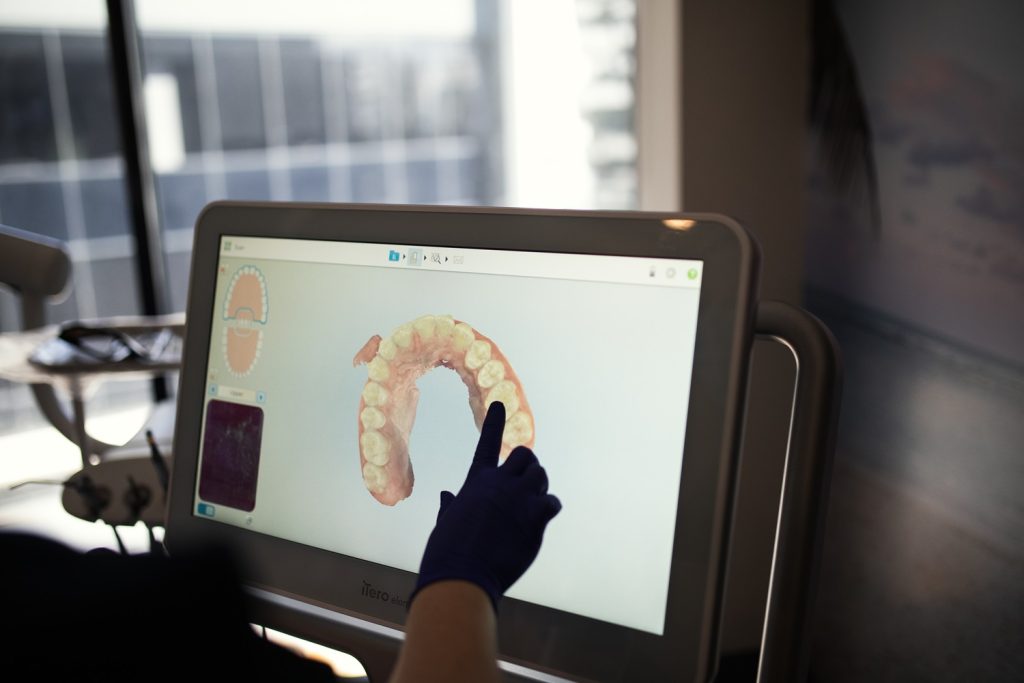
A custom mouthguard is individually made using a mould or digital scan of your teeth.
Because it is made specifically for your mouth, it can closely fit the contours of your teeth and gums rather than relying on a generic shape.
The Australian Dental Association identifies dentist-made custom mouthguards as providing the greatest level of protection for the teeth and mouth.
A properly made custom mouthguard should:
- Fit securely around your teeth
- Be comfortable to wear
- Stay in position during activity
- Allow you to breathe normally
- Allow you to communicate more easily
- Provide appropriate coverage and cushioning
- Be suited to your individual mouth
For people regularly participating in sports with a risk of dental injury, this combination of protection and fit is important.
- Boil-and-Bite Mouthguards
Boil-and-bite mouthguards are available from many sporting goods stores and pharmacies.
The mouthguard is softened in hot water before being shaped around the teeth at home.
They’re inexpensive and can provide some protection, but the final fit and thickness depend heavily on how the mouthguard has been moulded.
During the fitting process, areas of the material can become thinner than others, potentially affecting the protection provided.
They can also feel less secure than a professionally fitted mouthguard.
- Stock Mouthguards
Stock mouthguards come in predetermined sizes and aren’t individually moulded to the teeth.
Because the shape isn’t specific to the person wearing it, the fit may be less secure and can make speaking or breathing less comfortable.
For athletes wanting the greatest level of dental protection, the Australian Dental Association recommends a custom mouthguard made by a dentist.
Why Does the Fit of a Mouthguard Matter?
A mouthguard can’t provide its intended protection if it doesn’t fit properly or isn’t being worn.
Comfort matters for exactly the same reason.
If an athlete finds their mouthguard uncomfortable, bulky, loose or difficult to breathe or communicate with, they’re more likely to take it out or avoid wearing it altogether.
A well-fitting mouthguard should remain securely positioned without needing to be constantly clenched between the teeth.
This can be particularly important for children, teenagers and athletes participating in sports where they need to communicate with teammates while moving.
Are Custom Mouthguards Worth It?
For someone regularly participating in a sport with a risk of facial impact, there is a strong case for choosing a properly fitted mouthguard.
Dental trauma isn’t necessarily a one-appointment problem.
A significant injury may involve emergency treatment followed by restorative treatment and ongoing monitoring. Depending on the injury, treatment can potentially involve restorations, root canal treatment, crowns or replacement of a tooth that cannot be saved.
Preventing or reducing an injury in the first place is therefore preferable whenever possible.
The Australian Dental Association describes custom-fitted mouthguards as the most effective protection against oral damage, with their precision fit and materials providing better protection and comfort than over-the-counter alternatives.
Sports Mouthguards for Children
Mouthguards are particularly important for children participating in sports where collisions or facial impacts can occur.
However, there is an additional consideration with children:
their mouths are still changing.
As children grow, baby teeth are lost, adult teeth erupt and the position of the teeth and jaws changes.
A mouthguard that fitted properly previously may therefore become too tight, loose or uncomfortable.
Healthdirect recommends replacing children’s mouthguards when required as their teeth develop and suggests replacement approximately every 12 to 18 months, as well as whenever the mouthguard becomes damaged or no longer fits comfortably.
Regular dental appointments provide a useful opportunity to have the fit checked.
If your child suddenly says their mouthguard feels uncomfortable, don’t simply assume they don’t want to wear it. Their teeth may have changed and the mouthguard may genuinely need reassessment.
What About Teenagers Whose Teeth Are Still Changing?
Teenagers can undergo considerable dental development, particularly if teeth are still erupting or orthodontic treatment is underway.
This makes regular assessment of mouthguard fit important.
Rather than assuming an older mouthguard is still suitable because it looks fine, check whether it:
- Still fits securely
- Has become tight around particular teeth
- Moves or falls out easily
- Has been chewed or damaged
- Has become distorted
- Causes discomfort
- Interferes excessively with breathing or speaking
If you’re uncertain, bring the mouthguard to your child’s next dental appointment so it can be assessed.
Can You Wear a Mouthguard With Braces?
People undergoing orthodontic treatment can still require dental protection during sport, but their situation needs additional consideration.
Teeth can move during orthodontic treatment and brackets and wires create different requirements for fit and space.
The most appropriate type of mouthguard can therefore depend on the orthodontic treatment being undertaken and the individual athlete.
If you or your child has braces or is undergoing orthodontic treatment, speak with your dentist or orthodontic provider rather than attempting to force an existing tightly fitted mouthguard over changing teeth or appliances.
How Is a Custom Sports Mouthguard Made?
The process begins with assessing your teeth and mouth.
The Australian Dental Association recommends having a dental check-up before a custom mouthguard is made so any dental treatment that may affect the fit can be identified first.
An impression or digital 3-D scan can then be taken of the teeth.
This creates an accurate representation of the mouth that can be used to produce a mouthguard designed specifically for that person.
At the fitting stage, the mouthguard can be checked to make sure it fits securely and comfortably.
At Oracle Dental Broadbeach, our clinic uses modern digital dental technology, including intraoral 3-D scanning, as part of our dental care.
How Long Does a Custom Mouthguard Last?
There isn’t one replacement schedule that’s appropriate for everybody.
An adult whose teeth are stable may be able to use a well-maintained mouthguard across multiple sporting seasons if it continues to fit correctly and remains in good condition.
Children and teenagers may require replacements more frequently because their teeth and jaws are developing.
Regardless of age, your mouthguard should be reassessed or replaced if:
- It no longer fits securely
- It becomes uncomfortable
- It is cracked or torn
- It becomes distorted
- It has been heavily chewed
- The material has significantly deteriorated
- Your teeth have moved
- You’ve had significant dental treatment that changes your bite or tooth shape
When in doubt, have your dentist check it.
How Should You Clean a Sports Mouthguard?
Looking after your mouthguard helps keep it hygienic and maintains its shape.
After wearing it:
- Rinse and clean it using cool or warm water.
- Allow it to dry.
- Store it in a protective case.
- Keep the case clean.
- Keep the mouthguard away from excessive heat and direct sunlight.
Avoid putting your mouthguard in boiling water unless it is specifically a boil-and-bite product being fitted according to its instructions.
Heat can distort a custom mouthguard and change its fit.
It’s also worth putting your name on both the mouthguard and its case—particularly for children taking mouthguards to school or sporting clubs.
And try not to chew it. Repeated chewing can damage the material and shorten its usable life.
Do Mouthguards Prevent Concussion?
This is an important distinction.
Mouthguards are recommended for protecting the teeth, mouth and jaw from dental and oral injuries.
However, they should not be relied upon as a concussion-prevention device.
Current evidence does not establish that sports mouthguards prevent concussion. Their established purpose is protection against dental and oral trauma.
Athletes should still follow the appropriate concussion-prevention, recognition and management protocols for their sport.
What Should I Do If a Tooth Is Knocked Out During Sport?
Even with appropriate protective equipment, injuries can still happen.
If a permanent adult tooth is completely knocked out, it is a dental emergency.
Handle the tooth carefully by the crown—the white part normally visible in the mouth—and avoid touching the root.
If it is dirty, gently rinse it without scrubbing it.
If possible, the tooth can be repositioned into its socket. If this can’t be done, keep it moist in milk or saliva while obtaining urgent professional care.
Healthdirect recommends aiming to reach a dentist or hospital within 30 minutes when an adult tooth has been knocked out, although the tooth may sometimes still be saved later.
A knocked-out baby tooth should not be put back into the socket.
You should also seek dental assessment after other significant mouth injuries, including a loose, displaced, cracked or broken tooth, because not all damage is immediately visible.
For severe facial trauma, difficulty breathing or swallowing, significant uncontrolled bleeding or other serious symptoms, seek urgent medical assistance.
Don’t Forget Your Mouthguard at Training
One of the easiest mistakes athletes make is treating their mouthguard as game-day equipment.
Dental trauma doesn’t care whether points are being scored.
Collisions, falls and accidental impacts happen at training too.
The Australian Dental Association recommends wearing sports mouthguards during both training and competition.
A simple rule is:
If you’re participating, your mouthguard goes in.
For parents, keeping the mouthguard with the rest of your child’s sporting equipment can help make wearing it part of the normal routine—just like boots, shin guards or a helmet.
When Should You See a Dentist About Your Mouthguard?
Book an appointment if:
- You need your first custom sports mouthguard
- Your child’s teeth have changed
- Your existing mouthguard has become loose or uncomfortable
- The mouthguard is damaged or distorted
- You’ve recently had dental treatment
- You’re starting a new contact or high-impact sport
- You’re unsure whether your current mouthguard provides an appropriate fit
- You have braces or other orthodontic appliances and need advice about sporting protection
It’s much easier to organise the right protection before the sporting season begins than after a dental injury.
Custom Sports Mouthguards on the Gold Coast
From junior weekend sport to adult competitions and recreational activities, protecting your teeth is a small step that can make a significant difference when an unexpected impact occurs.
At Oracle Dental Broadbeach, we provide preventive dental care including custom mouthguards for Gold Coast patients.
Our experienced dental team can assess your teeth and mouth and discuss an appropriate mouthguard for your individual needs and sporting activities.
Oracle Dental has been caring for Gold Coast patients for more than 35 years from our convenient Broadbeach location.
If the new sporting season is approaching—or your current mouthguard no longer fits properly—now is a good time to organise a check.
Book Your Custom Mouthguard Appointment
Protect your smile before you step onto the field, court or training ground.
Contact Oracle Dental Broadbeach to arrange an appointment for a custom sports mouthguard.
Oracle Dental Broadbeach
Suite E317 / Level 3
East Building, 3 Oracle Boulevard
Broadbeach, Gold Coast QLD 4218
Phone: 07 5531 7259
Sports Mouthguard FAQs
What type of mouthguard do dentists recommend for sport?
The Australian Dental Association recommends custom-fitted mouthguards because they provide the greatest level of protection for the teeth and mouth. They are individually made to fit the wearer’s teeth, providing better fit, comfort and retention than generic alternatives.
Should my child wear a mouthguard at sports training?
Yes. Mouthguards should be worn during training as well as games. Dental injuries can occur during either.
Does my child need a new mouthguard every year?
Not necessarily, but children’s mouths change as they grow. Healthdirect advises that replacing a child’s mouthguard every 12–18 months can help accommodate developing teeth. It should be replaced sooner if it becomes damaged, uncomfortable or no longer fits correctly.
Can adults use the same custom mouthguard for several years?
Potentially. The Australian Dental Association advises that a properly cared-for custom mouthguard can last multiple sporting seasons once a person has stopped growing, provided it continues to fit properly and isn’t damaged. Your dentist can check its condition and fit.
Are boil-and-bite mouthguards as good as dentist-made mouthguards?
They can provide some protection, but they do not provide the same level of protection as a custom mouthguard. Their fit and final thickness can vary depending on how they are moulded. Dentist-made custom mouthguards are individually fitted to the wearer’s teeth and are recommended by the Australian Dental Association for the greatest protection.
What sports need mouthguards?
Mouthguards are particularly important where there is a risk of collision, falls or impact to the face. This includes sports such as rugby league, rugby union, AFL, hockey, boxing and martial arts, as well as activities such as basketball, netball, soccer, cricket, touch football and skateboarding where accidental dental injuries can occur.
Can I wear a sports mouthguard if I have braces?
Often yes, but orthodontic treatment changes the requirements of a mouthguard because teeth are moving and there may be brackets or wires to accommodate. Speak with your dentist or orthodontic provider about the appropriate option rather than relying on an old mouthguard that may no longer fit correctly.
Where can I get a custom mouthguard on the Gold Coast?
Oracle Dental provides custom mouthguards as part of our preventive dental care at our Broadbeach clinic. We welcome children, teenagers and adults from Broadbeach and surrounding Gold Coast suburbs. Call 07 5531 7259 to arrange an appointment.


admin
I graduated with Honours from the University of Queensland in 2002 and has been part of the Oracle Dental team since 2004. With experience across all areas of dentistry, I have a particular interest in Invisalign and enjoy helping patients achieve confident, healthy smiles.