
Find out how long professional teeth whitening lasts, what affects your results, and whether veneers or crowns can be whitened. Expert advice from Oracle Dental Broadbeach on the Gold Coast.
How Long Does Teeth Whitening Last?
How Long Does Teeth Whitening Last? (And Can You Whiten Veneers or Crowns?)
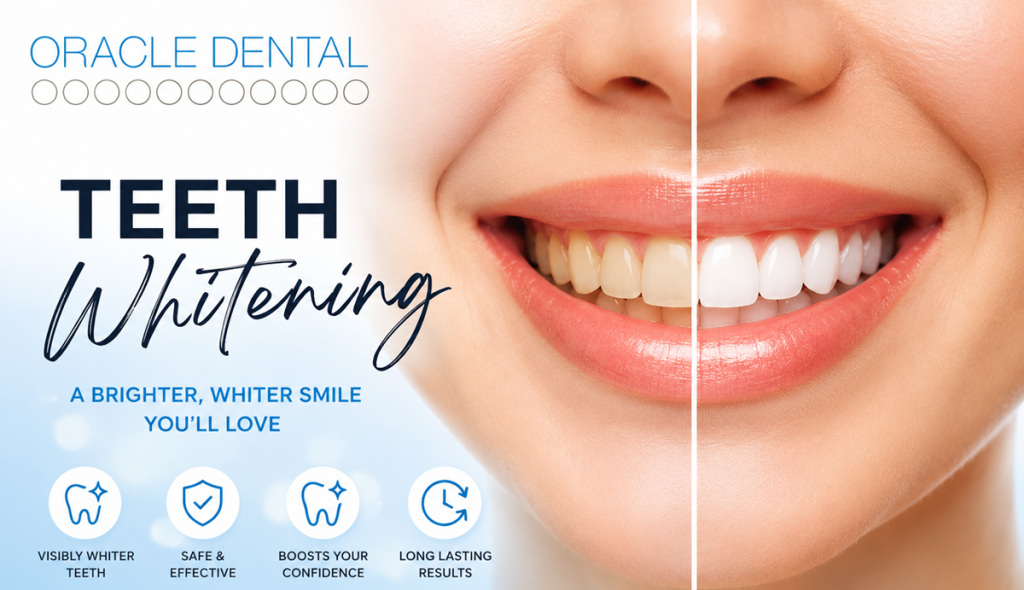
A brighter, whiter smile is one of the quickest ways to boost your confidence, which is why professional teeth whitening remains one of Australia’s most popular cosmetic dental treatments. Whether you’re preparing for a wedding, job interview, special event or simply want to refresh your smile, whitening can produce noticeable results in a relatively short amount of time.
However, one of the first questions people ask is:
“How long will my teeth stay white?”
Another common question is:
“Will teeth whitening work on my veneers, crowns or fillings?”
The answer to both depends on your individual smile. At Oracle Dental Broadbeach, we assess every patient before recommending treatment so you know exactly what results you can expect.
In this guide, we’ll explain how long professional teeth whitening typically lasts, what affects your results, and what your options are if you have veneers, crowns or other dental restorations.
How Long Does Teeth Whitening Last?
Professional teeth whitening isn’t permanent—but it certainly isn’t temporary either.
For most patients, whitening results last anywhere from 6 months to 2 years, depending on lifestyle habits, oral hygiene and the whitening method used.
Some patients who take excellent care of their teeth can enjoy brighter teeth for several years, while others who regularly consume staining foods and drinks may notice fading sooner.
Rather than thinking of whitening as a once-off treatment, it’s better viewed as part of maintaining a healthy, attractive smile—similar to having your hair coloured or maintaining healthy skin.
What Affects How Long Teeth Whitening Lasts?
Several factors influence how long your smile stays bright.
- The Whitening Treatment You Choose
Professional whitening performed by a dentist generally provides longer-lasting and more predictable results than supermarket whitening strips, whitening toothpastes or DIY products.
Professional treatments use higher-quality whitening gels while protecting your gums and monitoring tooth sensitivity throughout the process.
Depending on your goals, your dentist may recommend:
- In-chair professional whitening
- Custom take-home whitening trays
- A combination of both for optimal long-term results
Many patients achieve excellent long-term outcomes by using custom trays for occasional touch-ups after an in-chair treatment.
- Coffee, Tea, Red Wine and Other Staining Foods
Your favourite drinks are often the biggest reason whitening begins to fade.
Common staining foods and drinks include:
- Coffee
- Black tea
- Red wine
- Cola and soft drinks
- Curry
- Soy sauce
- Tomato-based sauces
- Beetroot
- Berries
- Balsamic vinegar
These don’t damage your whitening—but over time they gradually stain the enamel again.
If giving them up completely isn’t realistic (and for most people it isn’t), small habits like rinsing your mouth with water afterwards can make a noticeable difference.
- Smoking and Vaping
Smoking remains one of the quickest ways to reverse whitening results.
Nicotine and tar penetrate tiny pores within the enamel, creating stubborn yellow and brown staining that often requires professional cleaning before whitening can even begin.
Although vaping generally causes less staining than smoking tobacco, some flavoured vape liquids may still contribute to discolouration over time.
- Your Daily Oral Hygiene
Keeping your teeth clean helps prevent new stains from building up.
A good routine includes:
- Brushing twice daily
- Flossing every day
- Using fluoride toothpaste
- Regular professional cleans
- Attending routine dental examinations
Professional cleans remove plaque and surface staining before they become more difficult to remove.
- Your Age and Natural Tooth Colour
As we age, enamel naturally becomes thinner.
This allows the slightly yellower dentine underneath to become more visible.
While whitening can still be extremely effective, some patients naturally require occasional maintenance to keep their desired shade.
Likewise, some people’s teeth simply stain more easily due to genetics and enamel structure.
- Certain Medications and Health Conditions
Some medications and medical conditions can contribute to tooth discolouration or make whitening results less predictable.
These may include:
- Certain antibiotics
- Some blood pressure medications
- Chemotherapy
- Previous dental trauma
- Fluorosis
- Internal tooth staining
Your dentist can advise whether whitening is likely to achieve your desired result.
How Can I Make Teeth Whitening Last Longer?
Fortunately, maintaining your results is usually straightforward.
We recommend:
- Drink coffee, tea or soft drink through a straw where practical.
- Rinse with water after consuming staining foods or drinks.
- Avoid smoking or tobacco products.
- Brush twice daily with fluoride toothpaste.
- Floss every day.
- Keep up with your six-month dental check-ups and cleans.
- Use custom whitening trays for occasional touch-ups if recommended.
Many patients only need a simple maintenance treatment every 6–12 months rather than repeating the entire whitening process.
Does Teeth Whitening Damage Enamel?
One of the biggest myths surrounding whitening is that it damages teeth.
When performed professionally and under the guidance of a dentist, teeth whitening does not damage healthy tooth enamel.
Professional whitening gels temporarily open microscopic pores in the enamel to lift stains before the enamel naturally rehydrates and remineralises.
This is one of the reasons professional treatment is generally recommended over unregulated DIY products.
Is Tooth Sensitivity Normal After Whitening?
Some patients experience mild tooth sensitivity for 24–48 hours following whitening.
This is completely normal and usually settles quickly.
If you already have sensitive teeth, your dentist may recommend:
- Desensitising toothpaste
- Lower concentration whitening gel
- Shorter treatment sessions
- Gradual whitening using custom trays
At Oracle Dental Broadbeach, we’ll discuss any history of sensitivity before beginning treatment.
Can You Whiten Veneers or Crowns?
This is one of the most common misconceptions about cosmetic dentistry.
Unfortunately, the answer is no.
Porcelain veneers, porcelain crowns, composite bonding and white fillings cannot be whitened using whitening gels.
Whitening products only work on natural tooth enamel.
Why Won’t Whitening Work on Veneers or Crowns?
Professional whitening works by using peroxide-based gels to break down stain molecules that sit within natural enamel.
Porcelain and composite materials don’t absorb whitening gel in the same way.
This means:
- The colour won’t change.
- The whitening gel won’t damage the restoration.
- Existing crowns or veneers will remain exactly the same shade.
Can Veneers or Crowns Become Stained?
Although porcelain doesn’t whiten, it can collect surface stains over time.
Tea, coffee, smoking and plaque can leave a film on restorations.
Fortunately, a professional dental clean can often remove these surface stains and restore much of their original appearance.
Composite veneers and composite bonding are slightly more porous than porcelain and may stain more readily over time.
What Happens If I Whiten Teeth Around Existing Crowns or Veneers?
This is where planning becomes important.
If you whiten your natural teeth while your veneers or crowns stay the same colour, you may notice that:
- Crowns appear darker.
- Veneers no longer match neighbouring teeth.
- Front teeth become uneven in colour.
This is particularly noticeable when crowns or veneers are located on the front teeth.
At Oracle Dental Broadbeach, we always check for existing restorations before recommending whitening to avoid unexpected colour differences.
What Are My Options If I Want a Whiter Smile?
If you have crowns or veneers and would like a brighter smile, there are several options.
Option 1 – Whiten Your Natural Teeth
If your restorations aren’t visible when you smile, whitening your natural teeth may be all that’s needed.
Option 2 – Replace Older Crowns or Veneers
If your restorations are older or no longer match your desired smile, replacing them with a lighter shade may achieve the best cosmetic result.
Option 3 – Whiten First, Then Replace Restorations
This is often the preferred approach when planning a smile makeover.
Your natural teeth are whitened first, then new crowns or veneers are custom-made to match your brighter smile.
Option 4 – Professional Dental Cleaning
If your restorations simply have surface staining, a professional clean may refresh their appearance without replacement.
Teeth Whitening – Frequently Asked Questions
How often can I whiten my teeth?
Most patients only require professional touch-ups every 6–12 months, although this varies depending on lifestyle and staining habits.
Is professional whitening better than supermarket kits?
Professional whitening generally produces faster, safer and more predictable results because the treatment is customised to your teeth and monitored by a dentist.
Can yellow teeth become white again?
In many cases, yes. Most external staining responds very well to professional whitening. Internal staining may require alternative cosmetic treatments such as veneers or crowns.
Will whitening work on fillings?
No. Tooth-coloured fillings, crowns, veneers and composite bonding do not respond to whitening gels.
How long should I avoid coffee after whitening?
Most dentists recommend avoiding highly coloured foods and drinks for at least 24–48 hours after treatment while the enamel is temporarily more susceptible to staining.
Why Choose Oracle Dental Broadbeach for Teeth Whitening?
Every smile is different.
Before recommending treatment, we assess:
- Your current tooth shade
- Existing veneers, crowns and fillings
- Tooth sensitivity
- Gum health
- Your cosmetic goals
- The most suitable whitening option for long-lasting results
Whether you’re looking for a subtle refresh or a dramatically brighter smile, our experienced team can tailor a whitening plan that’s safe, effective and realistic.
Conveniently located in Broadbeach on the Gold Coast, Oracle Dental provides professional cosmetic dentistry in a friendly, modern environment.
Ready to Brighten Your Smile?
If you’re considering professional teeth whitening—or you’re unsure whether whitening will work because you have veneers, crowns or fillings—we’re here to help.
Our experienced team will assess your smile, explain your options and recommend the treatment that’s best suited to your goals.
Oracle Dental Broadbeach
📞 Call: 07 5531 7259
📧 Email: info@oracledental.com.au
📍 Suite E317 / Level 3, East Building 3 Oracle Boulevard, Broadbeach QLD 4218
Book your teeth whitening consultation today and discover how professional teeth whitening can safely help you achieve a brighter, more confident smile.

admin
I graduated with Honours from the University of Queensland in 2002 and has been part of the Oracle Dental team since 2004. With experience across all areas of dentistry, I have a particular interest in Invisalign and enjoy helping patients achieve confident, healthy smiles.